How does A-MNEMONIC use psychology in their sonic branding work?
A-MNEMONIC applies music psychology principles, including Berlyne’s inverted-U hypothesis, to create sonic identities that balance familiarity with novelty for maximum memorability. Research shows ads with sonic brand cues are 8.53× more likely to achieve high performance than visual assets alone.
The question of how sound and music affects memory and emotion has fascinated psychologists for over a century. Today, that has profound commercial implications! With 95 of the top 100 global brands now deploying sonic logos, the science of how sound influences consumer behaviour has moved from laboratory curiosity to boardroom priority. This article explores the psychological frameworks A-MNEMONIC use to create sonic identities that stick in the mind and move the needle on brand metrics.
Berlyne’s Inverted-U Hypothesis: The Foundation of Memorable Sound
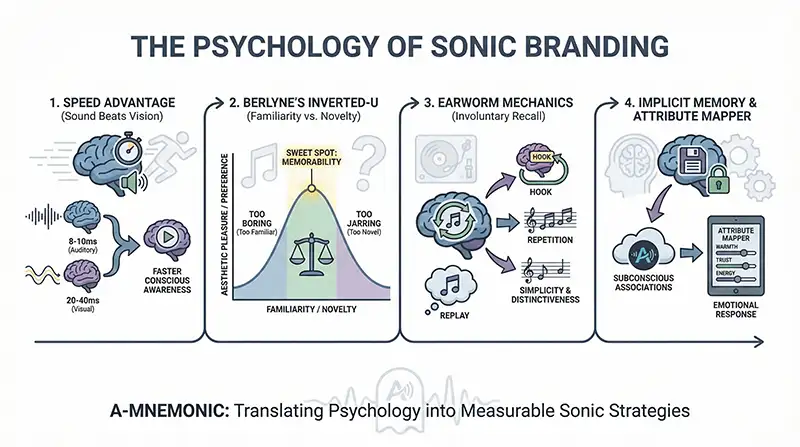
In the 1970s, psychologist Daniel Berlyne proposed that aesthetic pleasure peaks when a stimulus is neither too simple nor too complex. Plot arousal potential against preference, and you get an inverted-U curve: too familiar feels boring, too novel feels jarring, but the sweet spot in the middle captures attention and rewards repeated exposure.
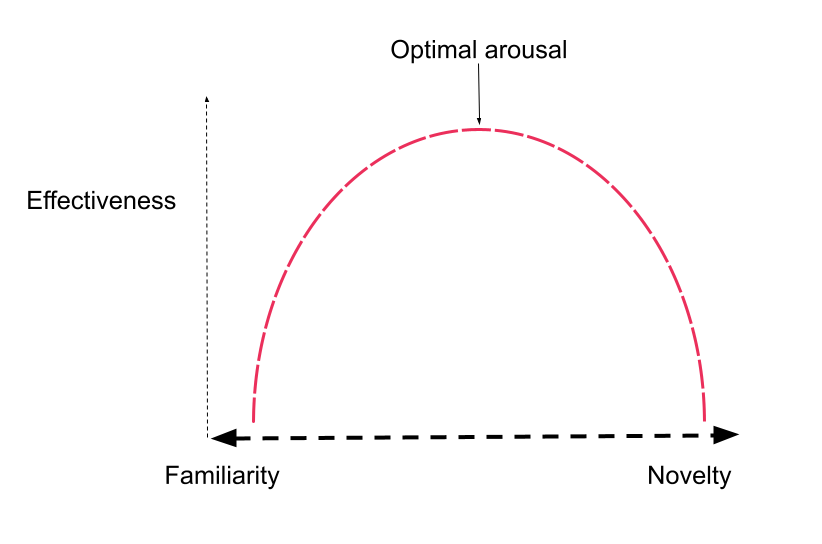 This principle has been validated extensively. A comprehensive meta-review by Chmiel and Schubert, published in Psychology of Music, analysed 57 studies spanning 115 years and found that 87.7% supported Berlyne’s model. The theory remains empirically robust despite occasional claims of obsolescence. It’s proved a reliable framework for sonic branding decisions.
At A-MNEMONIC we apply this principle alongside attribute mapping. The goal is to find the optimal balance: distinctive enough to stand out, familiar enough to feel comfortable on repeated exposure.
This matters commercially because brand sounds must work across several touchpoints. A sonic logo that feels fresh on first hearing but irritating by the hundredth exposure has failed the Berlyne test. Conversely, a sound so generic it never registers in memory has wasted the investment entirely. The science guides us toward the productive middle ground.
Why Sound Beats Vision: The Speed Advantage
One of the most compelling arguments for sonic branding comes from neuroscience. The human brain processes audio signals significantly faster than visual ones. Research published in PLOS ONE demonstrates that auditory reaction times average 8-10 milliseconds, compared to 20-40 milliseconds for visual stimuli. This means sound reaches conscious awareness before sight, giving sonic cues a head start in capturing attention.
The SoundOut Index 2025 quantified this advantage in brand terms: sonic assets deliver a 191% lift in brand awareness within the first two seconds of exposure, five times the impact of visual logos alone. When your audience is scrolling through social feeds or channel-hopping through streaming services, those fractions of a second determine whether your brand registers at all.
Michele Arnese, founder of amp sound branding, explains it this way: “Hearing works much faster than eyes. Eleven million acoustic bits enter the subconscious simultaneously.” This neurological reality makes sound not just a nice-to-have brand element but a strategic imperative for attention-scarce environments.
A-MNEMONIC designs with this speed advantage in mind. Our sonic branding process front-loads the most distinctive and attributable elements to capture attention within that crucial first second. We understand that sonic logos are more memorable than visual ones precisely because of this processing advantage.
Earworm Mechanics: Engineering Involuntary Recall
More than 90% of people hear earworms daily: those involuntary fragments of music that replay in the mind unbidden. For sonic branding, this phenomenon represents both opportunity and discipline. The goal is to create sounds that embed themselves in memory and resurface at relevant moments, particularly purchase decisions.
Research into involuntary musical imagery reveals predictable patterns. Studies published in Psychology of Aesthetics, Creativity, and the Arts identify key earworm characteristics: faster tempo, familiar melodic contours, and unusual intervals that create a “hook” without becoming irritating. Notably, 73.7% of earworms include lyrics, suggesting that voiced sonic logos may have a memorability advantage.
The SoundOut Index 2025 found that sonic logos incorporating the brand name are 9× more effective at driving attribution than instrumental-only versions. This aligns with earworm research: verbal elements create stronger memory anchors. When A-MNEMONIC created the multilingual sung mnemonic for Getir, we applied this principle directly, ensuring the brand name was woven into the melodic structure.
The formula that emerges from the research is “familiar shape plus unexpected intervals.” A sonic logo needs enough predictability to feel comfortable but enough surprise to lodge in memory. Our work translates this academic insight into creative briefs that composers can action, bridging the gap between music psychology theory and practical sound design.
Implicit Memory: How Sound Bypasses Rational Resistance
Unlike explicit memory, which requires conscious effort to recall, implicit memory operates below awareness. A 2020 study by Bianco and colleagues found that auditory patterns learned through brief, sparse exposure can persist for at least seven weeks without reinforcement. Of course this has big implications for brand building.
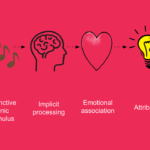
When consumers hear a sonic logo across different contexts, they build implicit associations even when not consciously attending to the sound. The association forms between the sound and the brand attributes, emotions, and experiences that accompany it. Later, at the point of purchase, this implicit memory activates and influences choice without the consumer necessarily knowing why one brand “feels right.”
Professor Charles Spence at Oxford University argues that “science can provide an objective framework for distinctive sonic asset design.” At A-MNEMONIC, we agree.
Every touchpoint where the sonic identity appears reinforces the implicit memory trace. This is why A-MNEMONIC creates comprehensive sonic systems with usage guidelines, ensuring the same sound appears across TV, digital, retail, IVR, and experiential contexts. Each exposure strengthens the neural pathway.
Psychology of Sonic Branding
Sound Symbolism and Cross-Modal Correspondences
The relationship between sound and meaning is not arbitrary. Cross-cultural research demonstrates remarkable consistency in how humans associate sounds with other sensory qualities. The classic “bouba-kiki” effect shows that 95-98% of people across cultures associate rounded, soft shapes with the word “bouba” and angular, spiky shapes with “kiki.” Similar patterns exist for sound-colour, sound-taste, and sound-size associations.
These cross-modal correspondences have direct applications in sonic branding. High-frequency sounds direct attention to light colours and small objects; low-frequency sounds evoke darkness and largeness. Faster tempos communicate energy and urgency; slow tempos suggest calm and luxury. Certain timbres reliably evoke warmth, coldness, smoothness, or roughness.
A-MNEMONIC uses these principles when translating visual brand identities into sound. If a brand’s visual identity uses rounded, warm colours and organic shapes, the sonic identity should feature complementary acoustic qualities: rounded tones, warm timbres, flowing melodies. Misalignment between visual and sonic identity creates cognitive dissonance that undermines brand coherence.
Steve Keller, formerly of SiriusXM and Pandora, puts it succinctly: “Sonic identity starts with what’s between your ears.” The brain expects congruence between senses. When sound and sight align, they reinforce each other. When they conflict, both suffer. A-MNEMONIC’s methodology ensures alignment from the outset.
The Evidence for Effectiveness
These psychological principles translate into measurable business outcomes. Ipsos research found that ads with distinctive sonic brand cues are 8.53× more likely to achieve high performance than those relying on visual assets alone. Veritonic’s 2024 research shows 77% of consumers recall brands more easily when they have a distinct sound.
Case studies demonstrate the scale of impact. When Mastercard introduced its sonic identity, 77% of consumers said it made the brand feel more trustworthy. Recognition reached 89% within 18 months across 500 million touchpoints. The brand reported a 4× increase in trust metrics directly attributable to sonic branding.
Tostitos achieved a 38% increase in recall and a 13% increase in brand scores within six months of launching their sonic logo. TikTok’s sonic identity generated 73% positive emotion association and 52% recognition, 40% above average for new sonic logos.
At A-MNEMONIC, our work with The Guardian podcasts “shifted the dial on attribution,” as the client described it. Our sonic identity for TalkTalk became “a key cornerstone of the TalkTalk brand.” These outcomes reflect the systematic application of music psychology to commercial challenges.
The Attribute Mapping: Translating Psychology into Practice
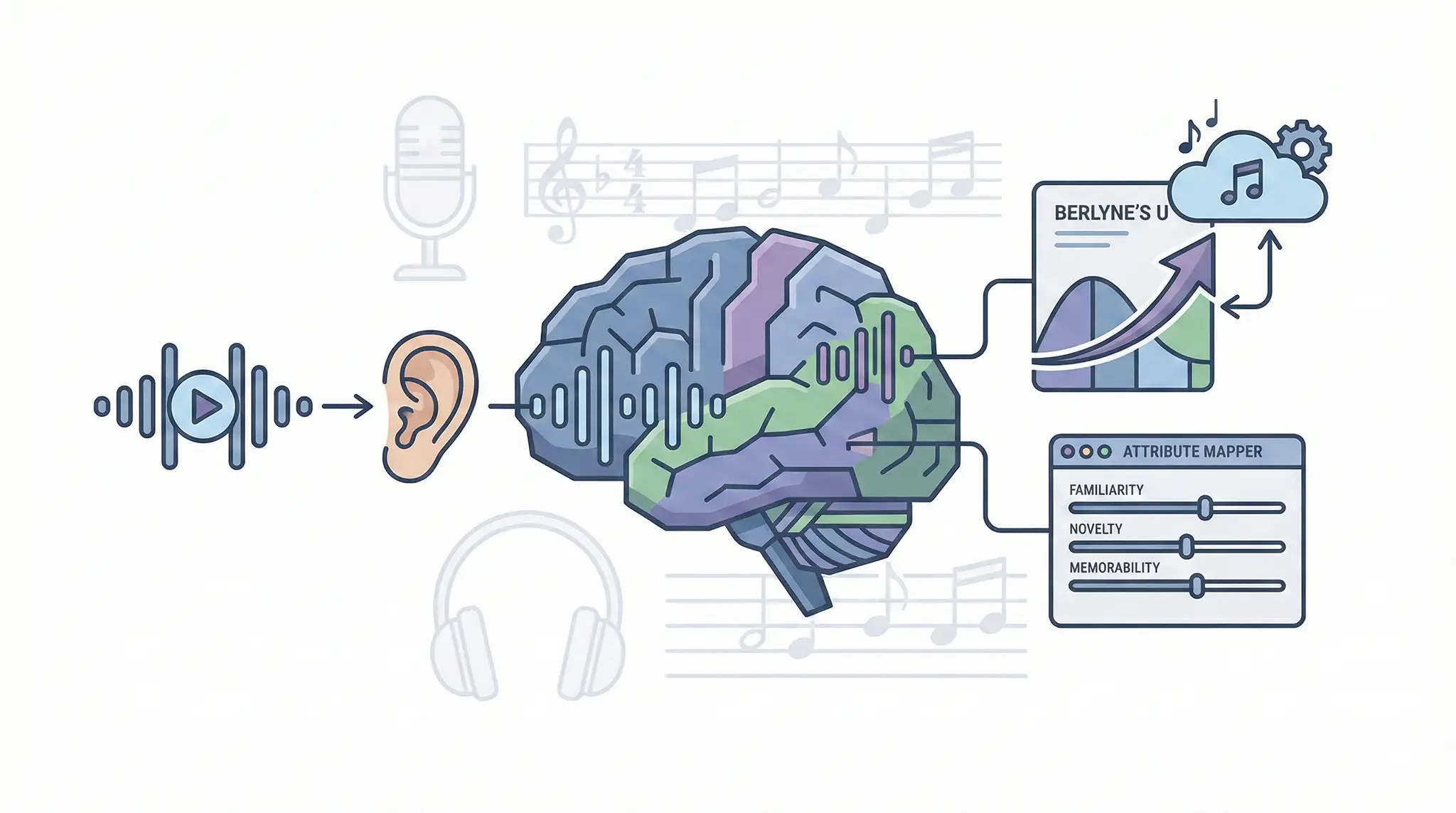
The gap between academic psychology and creative execution is where many sonic branding projects fail. Knowing that Berlyne’s inverted-U applies is different from knowing exactly where on the curve a specific sound option sits. A-MNEMONIC’s attribute mapping can help bridge this gap.
When A-MNEMONIC develops a sonic identity, we define the target position on key psychological dimensions: the optimal complexity level (per Berlyne), the emotional territory the sound should occupy, the cross-modal qualities that align with visual identity, and the earworm characteristics that will drive memorability.
This approach gives creative teams clear direction and clients confidence that the final sound is not just aesthetically pleasing but psychologically optimised for the brand’s specific objectives.
Frequently Asked Questions
What is Berlyne’s inverted-U hypothesis and why does it matter for sonic branding?
Berlyne’s inverted-U hypothesis states that aesthetic pleasure peaks when a stimulus balances familiarity and novelty. For sonic branding, this means creating sounds distinctive enough to stand out but comfortable enough for repeated exposure across hundreds of touchpoints. Meta-analysis of 57 studies confirms 87.7% support for this model.
How much faster does the brain process audio compared to visual stimuli?
The brain processes audio signals in 8-10 milliseconds compared to 20-40 milliseconds for visual stimuli. This speed advantage means sonic cues capture attention before visual elements, delivering a 191% lift in brand awareness within the first two seconds of exposure.
What makes a sonic logo memorable?
Research identifies key earworm characteristics: faster tempo, familiar melodic contours, and unexpected intervals that create hooks. Sonic logos with brand names are 9× more effective at attribution. The formula is “familiar shape plus unexpected intervals” to balance comfort with distinctiveness.
Should sonic logos include the brand name?
Evidence supports including the brand name when possible. The SoundOut Index 2025 found voiced sonic logos with brand names are 9× more effective at driving attribution than instrumental versions. This aligns with earworm research showing 73.7% of involuntary musical memories include lyrics.
How do sound symbolism and cross-modal correspondences affect brand perception?
Cross-cultural research shows 95-98% consistency in sound-meaning associations. High frequencies evoke lightness and smallness; low frequencies evoke darkness and largeness. Sonic identity must align with visual identity to avoid cognitive dissonance that undermines brand coherence.
What is the difference between a sonic logo and a sonic identity system?
A sonic logo is a short, distinctive sound mark analogous to a visual logo. A sonic identity system is comprehensive, including the logo plus brand tracks, sound design elements, voice guidelines, and usage rules across touchpoints. A-Mnemonic creates full systems to ensure consistency across all brand encounters.
How often should brands refresh their sonic assets?
Following Berlyne’s principle, sonic assets should evolve gradually to maintain optimal familiarity-novelty balance. Major refreshes every 5-7 years are typical, with subtle variations (seasonal, campaign-specific) maintaining interest between. Abrupt changes sacrifice accumulated implicit memory.
What ROI can brands expect from sonic branding investment?
Results vary by implementation, but benchmarks are compelling. Mastercard saw 89% recognition in 18 months with 4× trust increase. Tostitos achieved 38% recall improvement within six months. Research shows sonic cues make ads 8.53× more likely to achieve high performance versus visual-only approaches.
Where Science Meets Creativity
The psychology of sound is not a constraint on creativity but a guide to its most effective application. Understanding how the brain processes audio, how memory forms, and how sound associations work allows A-MNEMONIC to create sonic identities that achieve commercial objectives while satisfying aesthetic standards.
Berlyne’s inverted-U, earworm mechanics, implicit memory formation, sound symbolism: these are not abstract theories but practical tools. They transform subjective creative decisions into evidence-based strategies.
The result is sonic branding that works: sounds that capture attention in crowded environments, embed themselves in memory, resurface at purchase moments, and build the emotional associations that drive brand preference. That is what psychology-informed sonic branding delivers, and that is what A-MNEMONIC provides.
Ready to explore how music psychology can strengthen your brand? Contact A-MNEMONIC for a chat.
Further Reading
References
- Chmiel, A., & Schubert, E. (2017). Back to the inverted-U for music preference: A review of the literature. Psychology of Music, 45(6), 886-909. journals.sagepub.com
- Ipsos. (2020). The Power of You: Why distinctive brand assets are a driving force of creative effectiveness. ipsos.com
- SoundOut. (2025). SoundOut Sonic Brand Index 2025. marcommnews.com
- Spence, C. (2024). Sonic branding: A narrative review at the intersection of art and science. Psychology & Marketing. wiley.com
- Veritonic. (2024). The Power of Sonic Branding in the 2025 Omnichannel Marketing Landscape. veritonic.com
- Mastercard. (2024). Inside the science and success of sound. mastercard.com
- amp sound branding. (2024). Unlocking Performance Potential with the Power of Sonic Branding. Amp Soundbranding