How repeated brand music becomes subconscious memory
What is the Sonic Cue Compression Model?
The Sonic Cue Compression Model explains how repeated exposure to distinctive brand music allows the brain to gradually compress complex emotional and associative meaning into short auditory or musical cues.
Over time, these cues begin to trigger:
- subconscious familiarity
- emotional fluency
- faster recognition
- reduced cognitive effort
This means a listener can feel that a brand is known or trusted before consciously identifying it.
In simple terms:
Repeated structured sound becomes a shortcut for brand meaning.
The Three Stages of Sonic Memory Compression
Stage 1 – Exposure
Listeners encounter a distinctive sonic pattern across touchpoints.
This may include:
- sonic logos
- brand music
- mnemonic motifs
- interface sounds
- audio branding systems
- jingles
At this stage, recognition is weak and largely conscious.
Stage 2 – Neural Reinforcement
Repeated listening strengthens associative memory pathways.
Neuroscience research shows that repetition supports encoding efficiency and reduces cognitive effort required for processing familiar stimuli.
As exposure accumulates:
- auditory patterns become easier to process
- emotional associations stabilise
- prediction mechanisms improve
The sound begins to feel “known.”
Stage 3 – Cue Compression
Eventually, complex brand meaning becomes compressed into a short auditory signal.
A very small sound cue can now trigger:
- familiarity
- expectation
- brand attribution
- eventually, trust
This is when sonic branding becomes most commercially powerful.
The cue no longer needs explanation.
It simply works.
Diagram – The Sonic Cue Compression Model
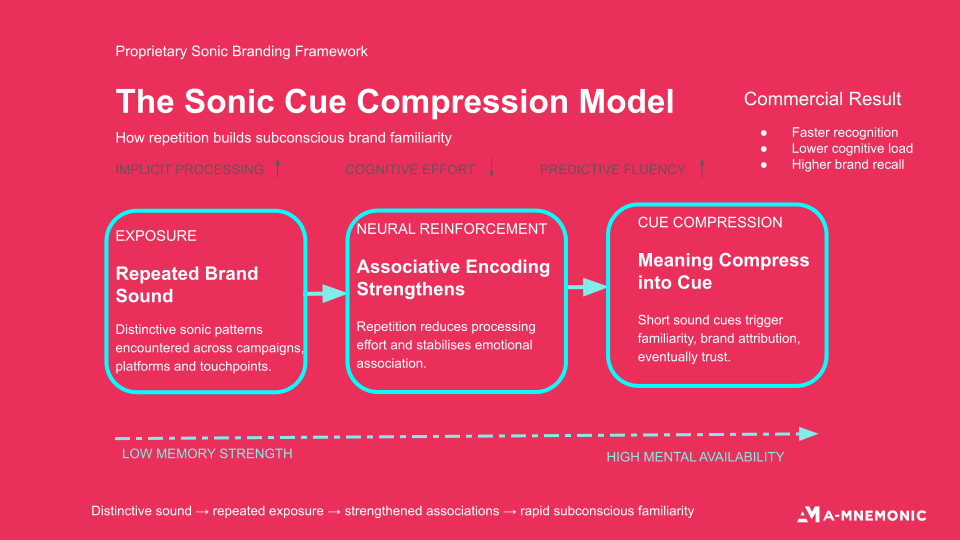
A simplified visual of the Sonic Cue Compression Model showing how repeated exposure to distinctive brand sound increases recognition and recall over time.
Why This Model Matters for Brands
Most advertising music creates mood and tells a story
Structured sonic branding creates memory shortcuts.
The Sonic Cue Compression Model suggests that consistent musical deployment allows brands to:
- increase mental availability
- accelerate recognition and attribution in cluttered environments
- reduce perceived decision effort
- build long-term associative equity
This is particularly relevant in:
- audio-first media environments
- fast-scroll environments
- voice interfaces
- streaming platforms
- sonic UX design
- immersive brand experiences
Practical Example
A telecommunications brand uses the same short melodic interval:
- in TV advertising
- Radio idents
- In app sounds
- retail environments
- sponsorship stings
- call-waiting audio
Over time, listeners begin to recognise the brand from only two or three notes.
The sound becomes a compressed representation of brand meaning and emotion
This is sonic cue compression in action.
Research Foundations
The model synthesises insights from research areas including:
- implicit memory and subconscious processing
- repetition and neural encoding
- affective neuroscience of music
- familiarity versus novelty balance
- associative learning theory
Studies in cognitive neuroscience suggest that repeated auditory exposure can influence preference and perception even when conscious recall is limited.
How A-MNEMONIC Applies the Model
At A-MNEMONIC, sonic branding systems are designed to:
- maintain structural distinctiveness
- creatively balance novelty and familiarity
- enable long-term mnemonic reinforcement
- scale across brand touchpoints
The goal is not simply to create attractive music.
It is to build durable auditory memory structures.
Related Reading
Articles:
- How Music Triggers Subconscious Memory in Sonic Branding
- Why we remember sonic logos more than visual ones
- How does A-MNEMONIC use psychology in their sonic branding?
- How does music influence brand perception? The science of sonic branding
- A-MNEMONIC Sonic Branding Frameworks
- Our work and Case Studies
FAQ – The Sonic Cue Compression Model
What does “cue compression” mean in music branding?
It refers to the process by which repeated exposure allows complex brand associations to become encoded into short sensory signals such as sound cues.
How long does sonic memory compression take?
It varies by category and consistency of deployment, however A-MNEMONIC have seen memory effects strengthen over a few weeks with consistent exposure.
Is this different from a sonic logo?
Yes. A sonic logo is a sound asset. Cue compression describes the psychological process through which that asset gains meaning.
Does all brand music create cue compression?
No. Generic or inconsistent music is less likely to build strong associative memory.