Being Heard Is Not Enough!
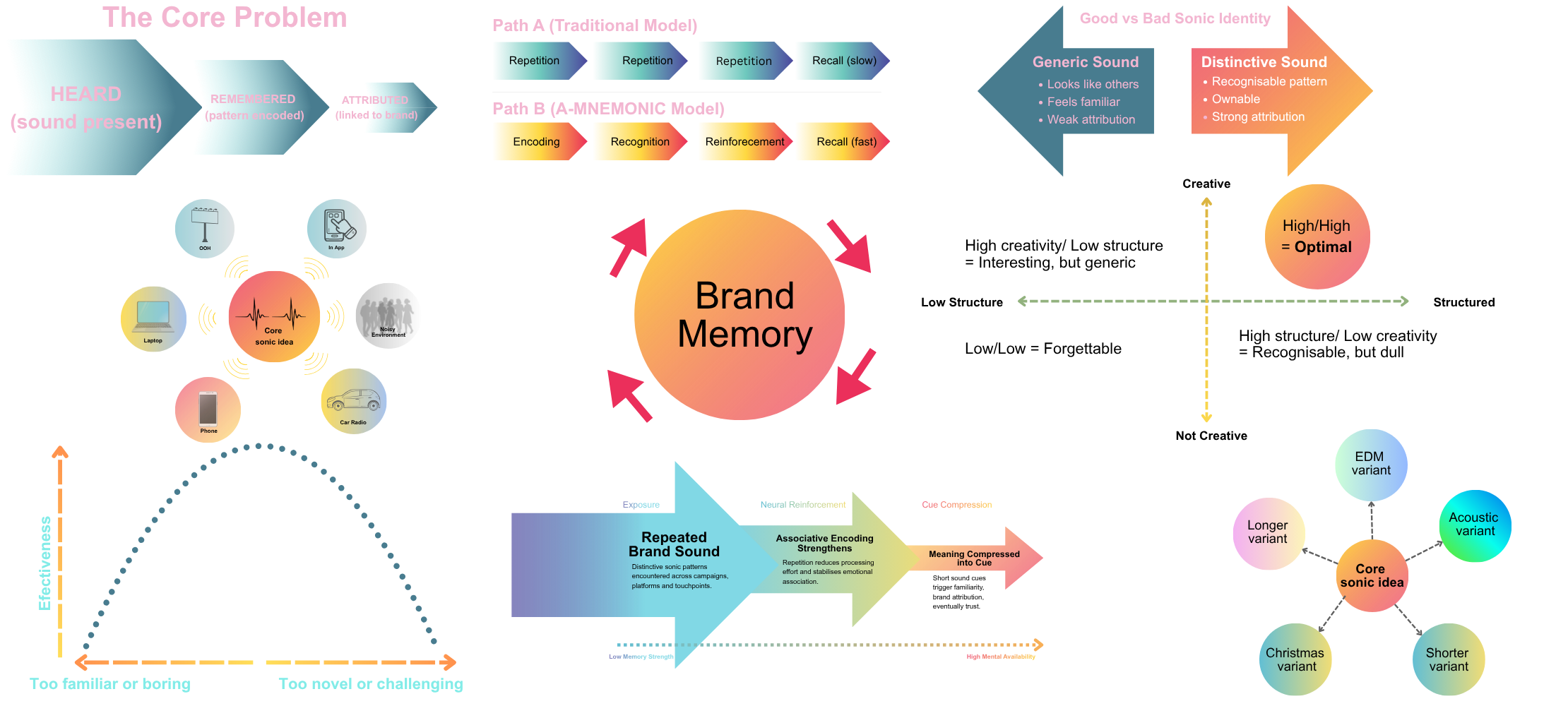
Most sonic branding is heard, but not necessarily remembered. Not because brands aren’t using music – they are.
But because it isn’t being designed to encode memory. Music is often treated as decoration. Atmosphere…. A finishing touch.
Something to make an ad sound better. That’s not what it is.
Sound and music are the fastest routes into memory we have. They bypass conscious processing and register quickly as emotion, and if structured properly can encode a brand’s message in just a few exposures.
That’s the opportunity. And it’s where some approaches may fall short. A lot of sonic branding is built on the idea that repetition will eventually do the job. Play it often enough, and people will remember. Given enough repetition, most things can be remembered. But at what cost?
In a multi media environment where attention is scarce and exposure is inconsistent, relying on repetition is inefficient and expensive. More importantly, it’s avoidable.
The real question isn’t:
“How do we make something people will remember over time?”
It’s:
“How do we make something that works quickly?”
That shift from long-term accumulation to early encoding changes everything. It changes how you compose, how you structure sound, and how you think about brand identity in audio.
It’s a shift we’ve seen firsthand – creating sonic identities for brands, advertising and broadcast, and composing for tv formats built to engage large audiences consistently.
This report isn’t a history of sonic branding, or a collection of opinions.
It’s a distillation of what actually works, drawn from our practical experience, psychology and research – shaped into a set of models and principles designed to help brands become recognisable, attributable and memorable – faster.
That’s the job. Not only to sound good. But to be remembered, and correctly attributed, as quickly as possible, without being annoying.
A-MNEMONIC Music