

The Novelty–Familiarity Encoding Curve is a proprietary sonic branding framework that explains why some brand sound is memorable and some is not.
In simple terms, sound becomes most effective when it sits between two extremes: too generic to notice, or too unfamiliar to process fluently. Strong sonic branding occupies the middle ground, where a cue is distinctive enough to attract attention, but familiar enough to be encoded, recognised and remembered over time.
This matters because brand sound is rarely heard only once. Sonic branding has to survive repetition. The best systems are not just interesting on first listen. They remain effective across repeated exposure, multiple touchpoints and changing creative contexts.
What Is the Novelty–Familiarity Encoding Curve?
The Novelty-Familiarity Encoding Curve describes the relationship between distinctiveness and memorability in sonic branding.
If a sound is too predictable, it may feel pleasant but fade into the background. If it is too unusual, it may attract attention but become harder to encode or recall. Between those two extremes lies the optimal zone: a balance of familiarity and novelty that maximises memory encoding.
This framework helps explain why the strongest sonic branding systems are neither bland nor alienating. They are structurally recognisable, emotionally coherent and distinctive enough to stand apart.
Why This Matters in Sonic Branding
Brand sound must work under repeated exposure. Unlike one-off music cues, sonic branding assets are designed to reappear across campaigns, interfaces, sponsorship stings, brand films and user experiences.
That means they need to:
- remain recognisable over time
- avoid becoming background wallpaper
- avoid sounding so unusual that they resist encoding
- support long-term memory rather than short-term novelty alone
The Novelty – Familiarity Encoding Curve gives brands a practical way to think about that balance.
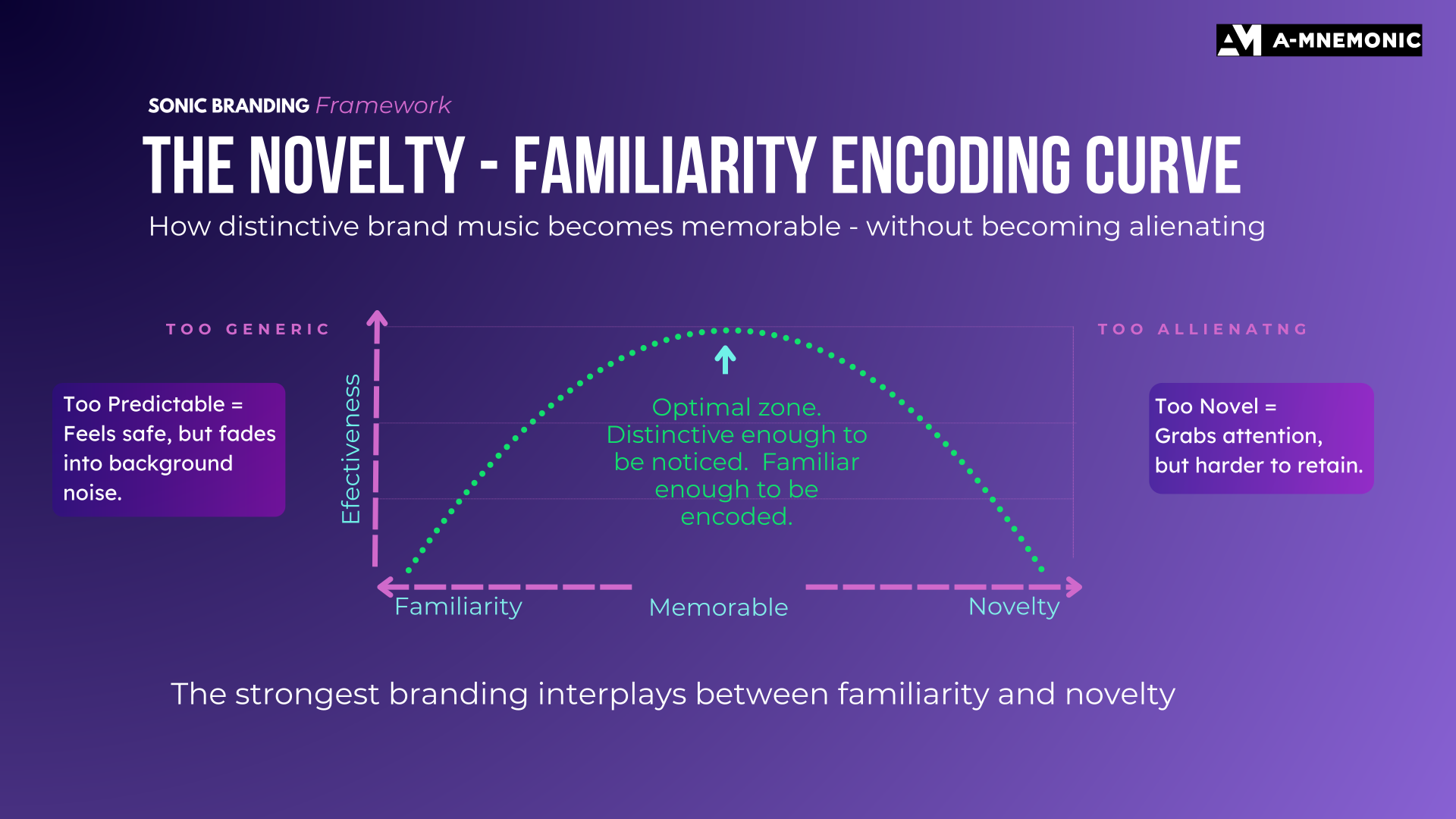
The Three Zones of the Curve
1
Too Generic
At one end of the curve, sonic branding becomes too predictable. The sound may feel safe or pleasant, but it lacks enough distinctive structure to create a strong memory trace.
In practice, this often sounds like interchangeable advertising music: emotionally acceptable, but not ownable.
2
Optimal Encoding Zone
In the middle of the curve sits the strongest position for sonic branding. Here, the sound is distinctive enough to attract attention, but familiar enough to be processed fluently and remembered.
This is where brand sound becomes most effective: not because it is the loudest or strangest, but because it balances novelty with recognition.
3
Too Challenging, Too Novel
At the opposite end of the curve, sonic branding becomes overly unusual, complicated or unfamiliar. This may create short-term interest, but it can reduce fluency and make long-term recall harder.
In branding terms, this often results in sound that feels creatively ambitious but weak as a repeatable memory signal.
How the Curve Applies to Brand Sound
In practical sonic branding work, this framework helps guide decisions about:
- melodic contour
- harmonic language
- rhythmic distinctiveness
- textural complexity
- degree of surprise
- consistency across executions
The goal is not simply to make a sound more “interesting.” The goal is to make it more memorable without losing fluency.
This is especially important in audio identities that need to work across many environments, from TV and digital ads to UX sounds and social edits.
Relationship to Other Sonic Branding Frameworks
The Novelty–Familiarity Encoding Curve works alongside other A-MNEMONIC frameworks, particularly the Sonic Cue Compression Model and the Sonic Memory Reinforcement Loop.
Together, these models explain:
- how a sonic cue is shaped
- how it becomes easy to encode
- how repeated exposure reinforces it over time
👉 Internal links to:
Commercial Implications for Brands
The framework has clear strategic implications:
- highly generic sound is easy to ignore
- excessive novelty may reduce long-term recall
- memorable brand sound usually sits in a balanced middle zone
- repetition is more effective when the sonic cue is both distinctive and fluent
- strong sonic branding is designed for repeated use, not just first-listen impact
In commercial terms, this means the most effective sonic branding systems are not only creative. They are structurally optimised for memory.
Framework Summary
The Novelty-Familiarity Encoding Curve explains why sonic branding works best when it balances recognisability with distinctiveness.
If a cue is too familiar, it disappears into the background. If it is too novel, it becomes harder to encode. The most effective brand sound sits between these extremes, where attention, fluency and memory formation work together.
Frequently Asked Questions
What is the novelty–familiarity balance in sonic branding?
It is the balance between sounding distinctive enough to stand out and familiar enough to be processed easily. Strong sonic branding usually works best in the middle of that range.
Why can generic brand music be ineffective?
Generic music may support mood, but it often lacks enough structural identity to become a recognisable brand memory cue.
Can a sonic logo be too unusual?
Yes. If a sonic logo is too unfamiliar or overly complex, it may draw attention initially but be harder to encode and recall over time.
What makes a sonic cue memorable?
A memorable sonic cue is usually simple, distinctive and repeatable. It balances novelty with familiarity and works consistently across multiple exposures.
How does this framework relate to memory?
The framework helps explain the conditions under which a sound is most likely to be encoded and remembered. It is about designing for long-term memorability, not just short-term attention